the craft: caprice
Back to: the violin maker
A workshop in 16th century Italy would have looked and smelt remarkably similar to the workshop of today's violin maker. The tools and techniques have hardly changed since the first “modern” violins were created in the workshops of Cremona, near Milan. Indeed, the shape of the violin itself has hardly changed since it was honed to perfection by the great masters of by the great masters of violin making who worked in Italy at that time. Foremost of these were Andrea Amati (who famously created a set of instruments for Charles IX of France in around 1560); his grandson Nicola Amati; and then Stradivari himself, possibly once a pupil of Nicolo Amati, but by 1700 already a famous violinmaker in his own right. These people created the shape and sound of the instrument we still see and hear today and their techniques and skills are those still practised in every similar luthier workshop. It is remarkable that the instrument they perfected has not fundamentally changed in 500 years despite industrial revolutions and scientific advances. The sound of a Stradivari violin is still the hallmark to which all violin makers aspire.
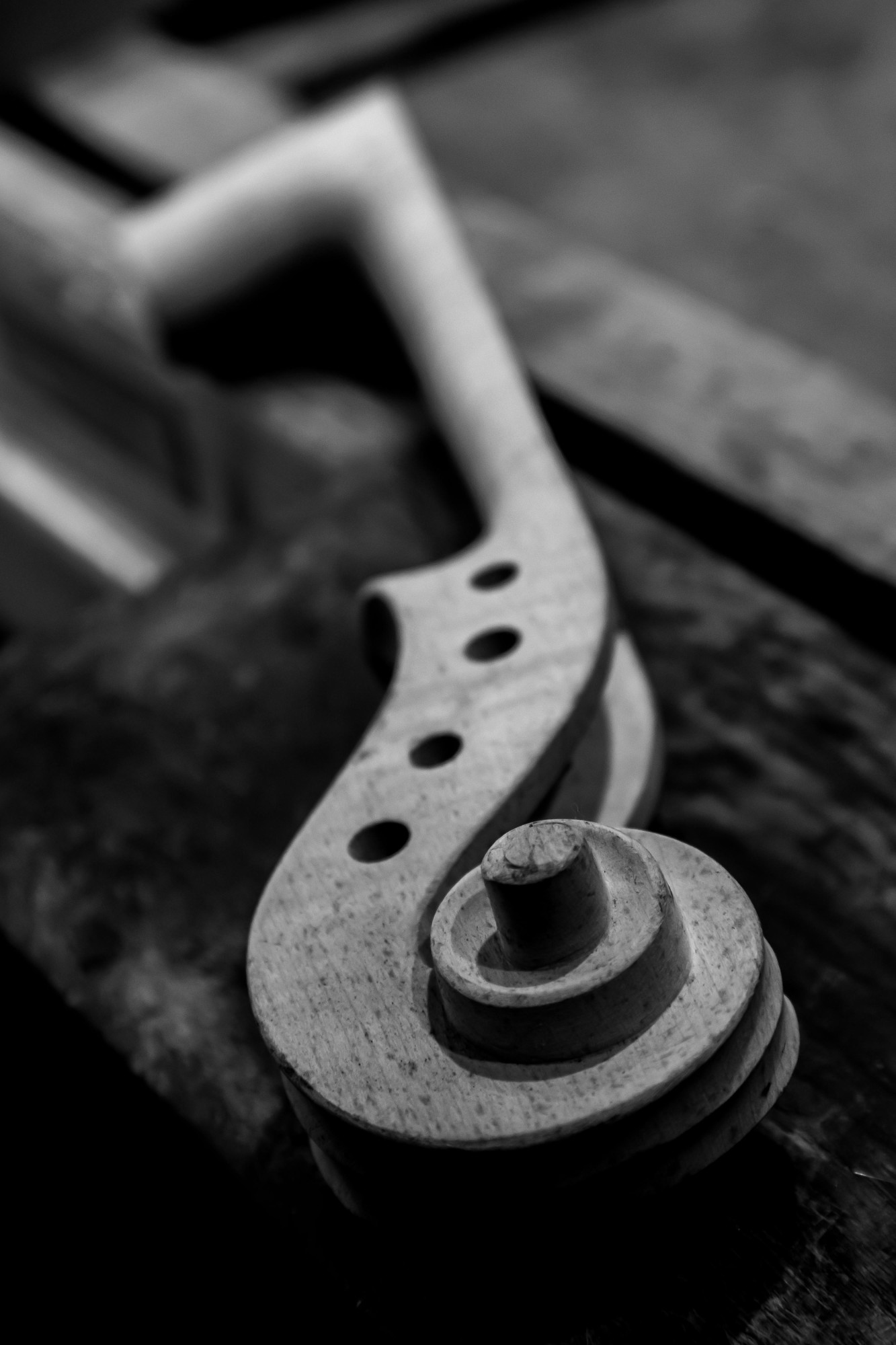
Maple and spruce are the main woods used in the making of violins. The favoured source of the wood is still the high alpine forests of Italy and Austria that were used by the Italian masters. Here the harsh winters cause the trees to produce more lignin which strengthens the wood. Maple is used for the backs, ribs and scrolls of the violon as it is less elastic than spruce and creates a stronger box. Spruce itself is used for the front as it is a soft wood and its elasticity is ideal for the critical acoustic resonance of the violin sound. Figured maple gives the beautiful, rippled effect on the backs of the finest violins. Black ebony wood is used for the finger board, pegs and tailboard.
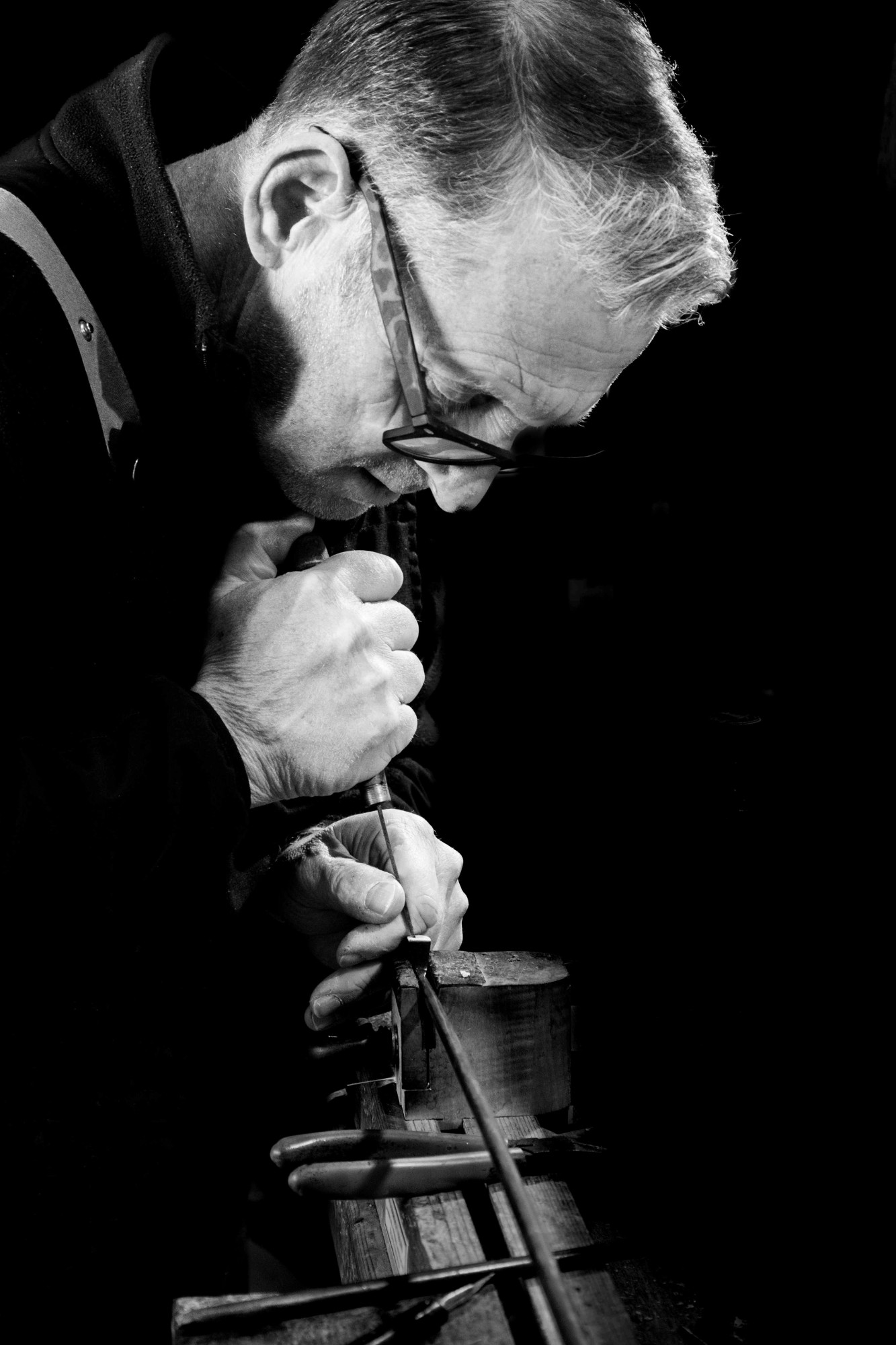
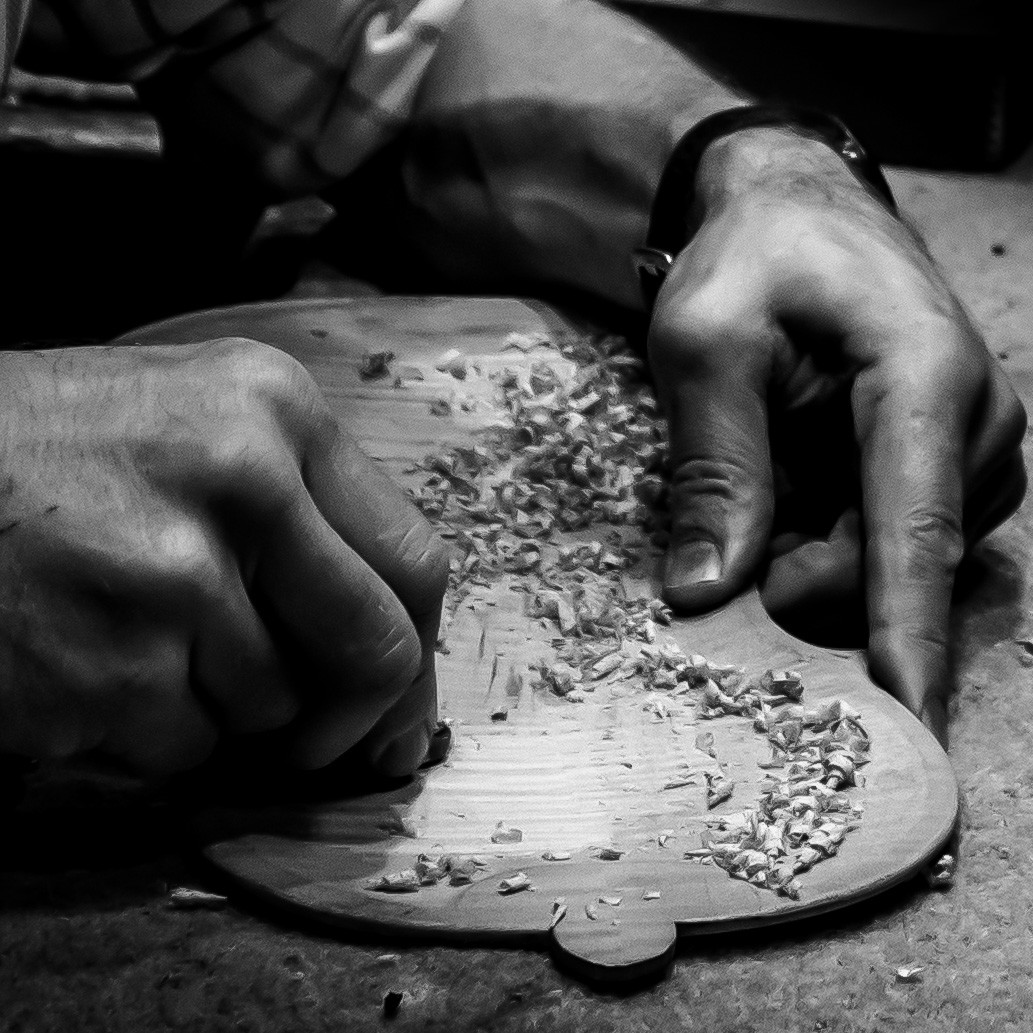
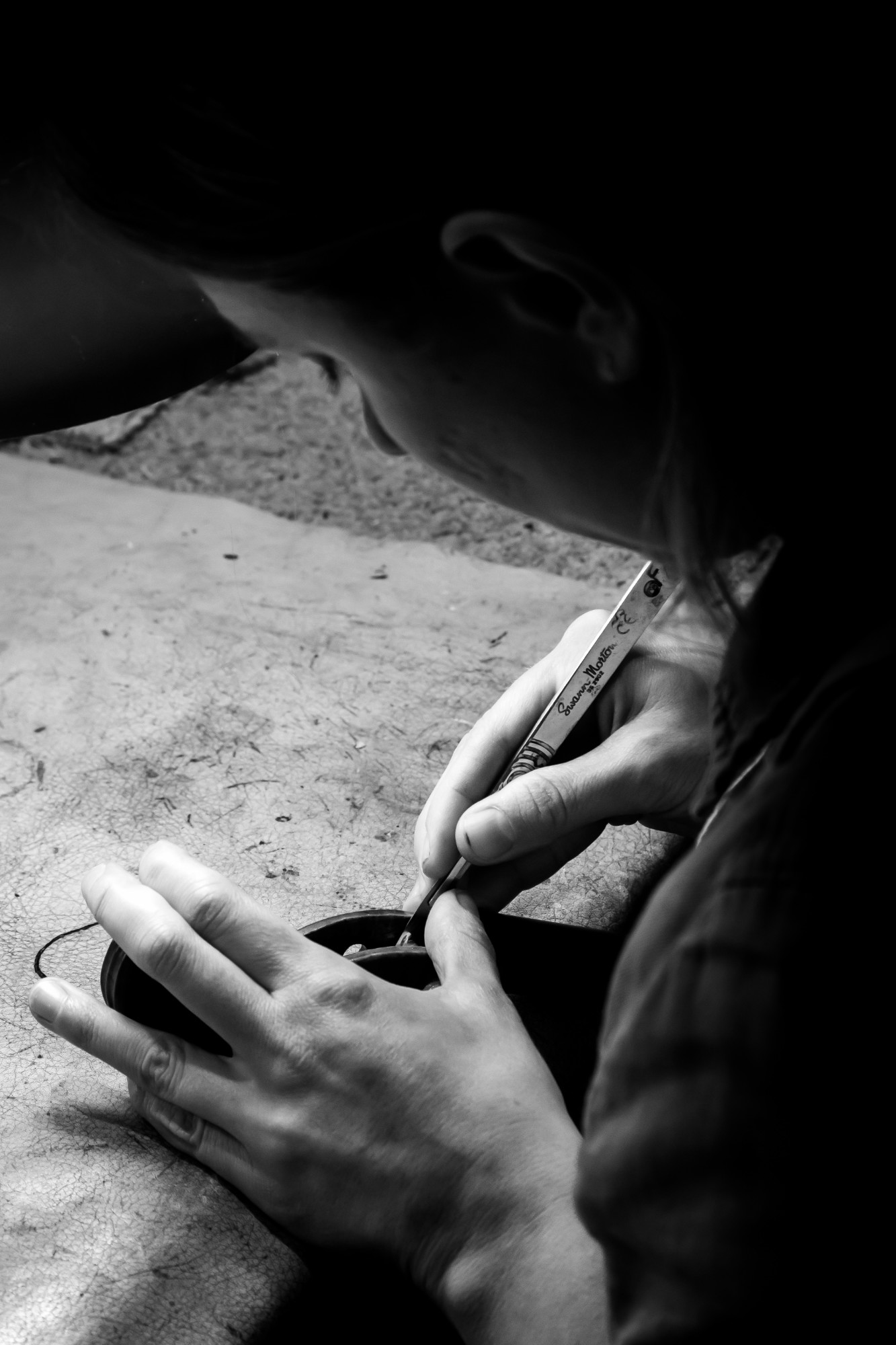
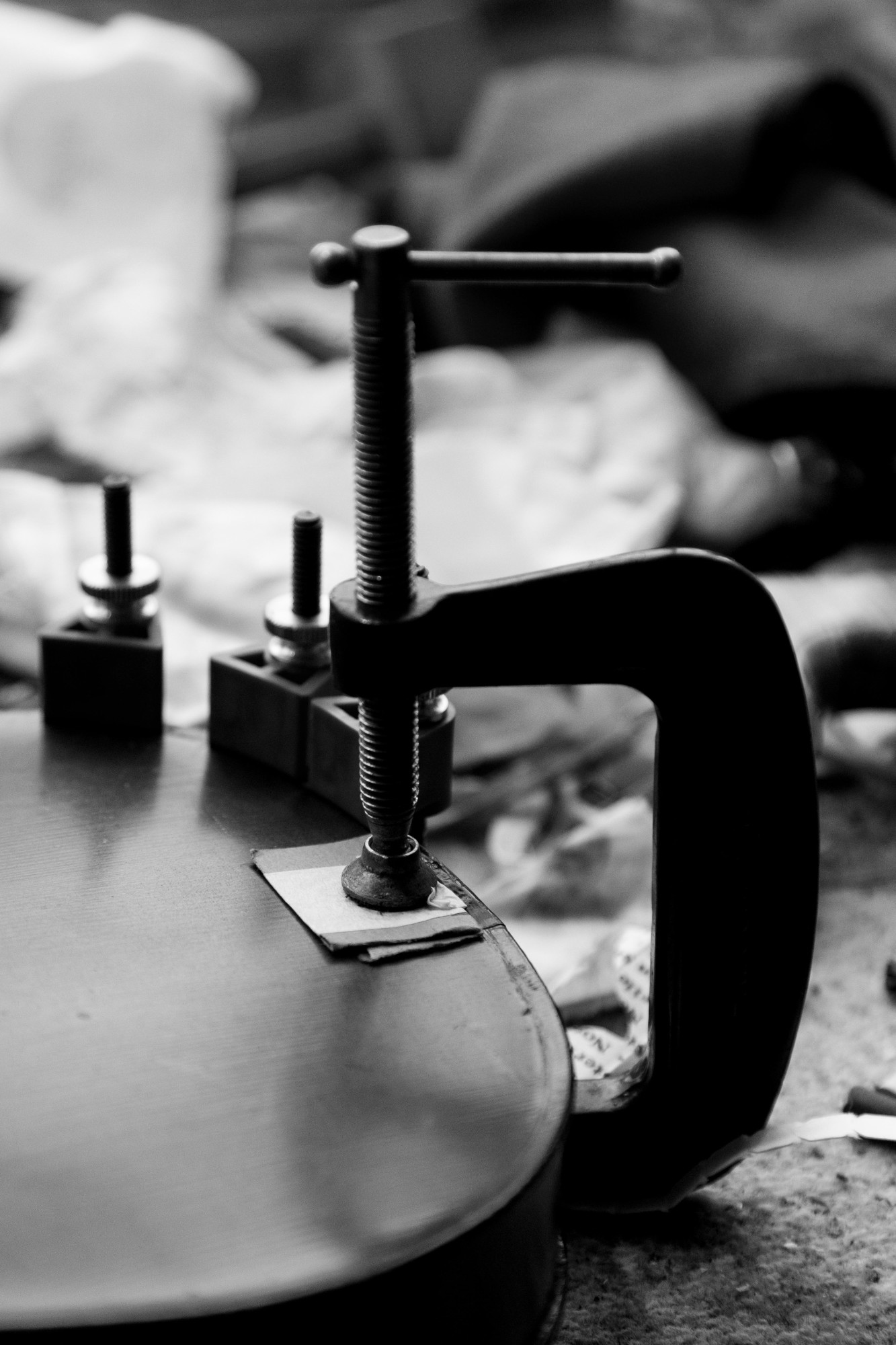
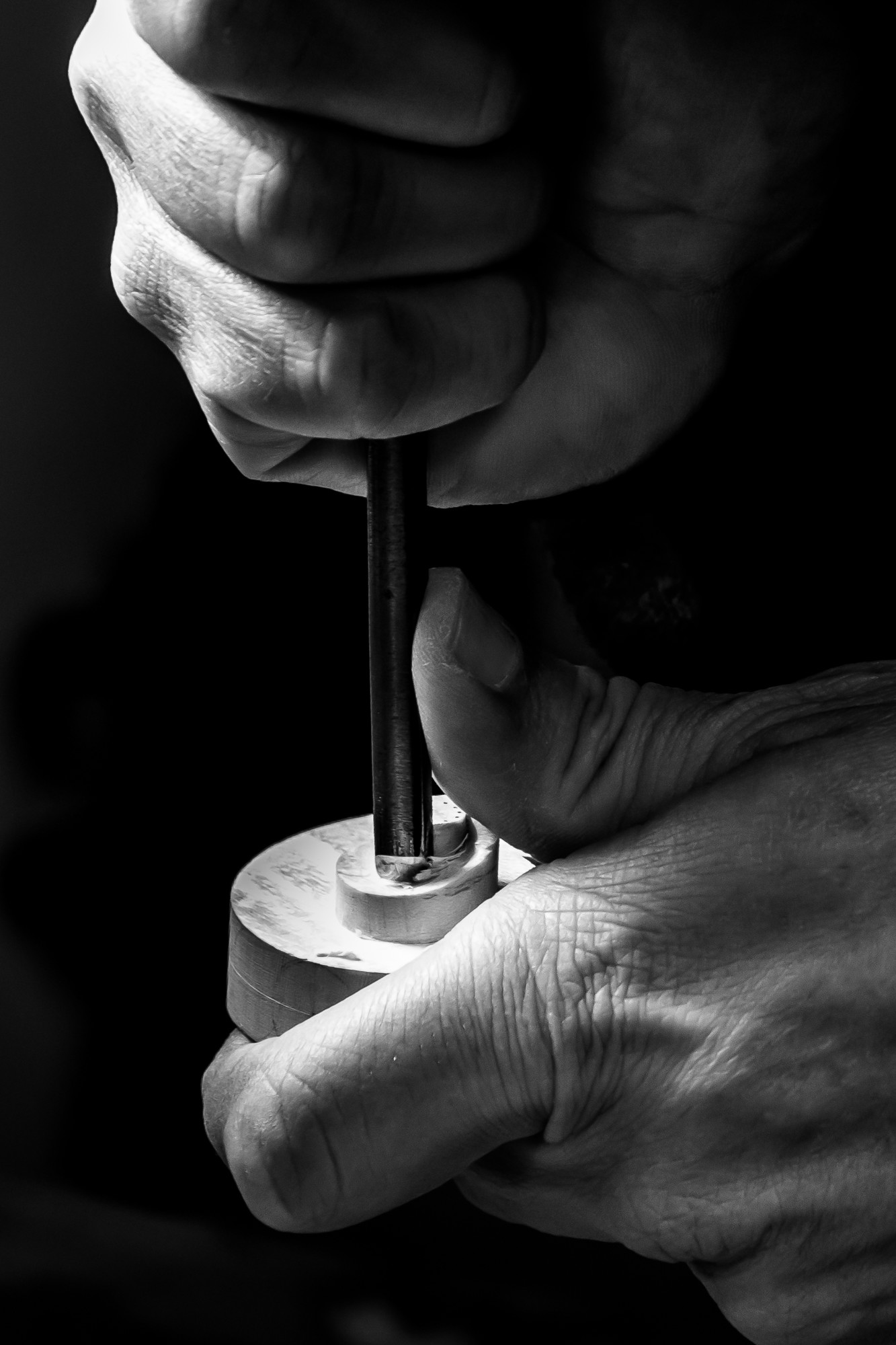
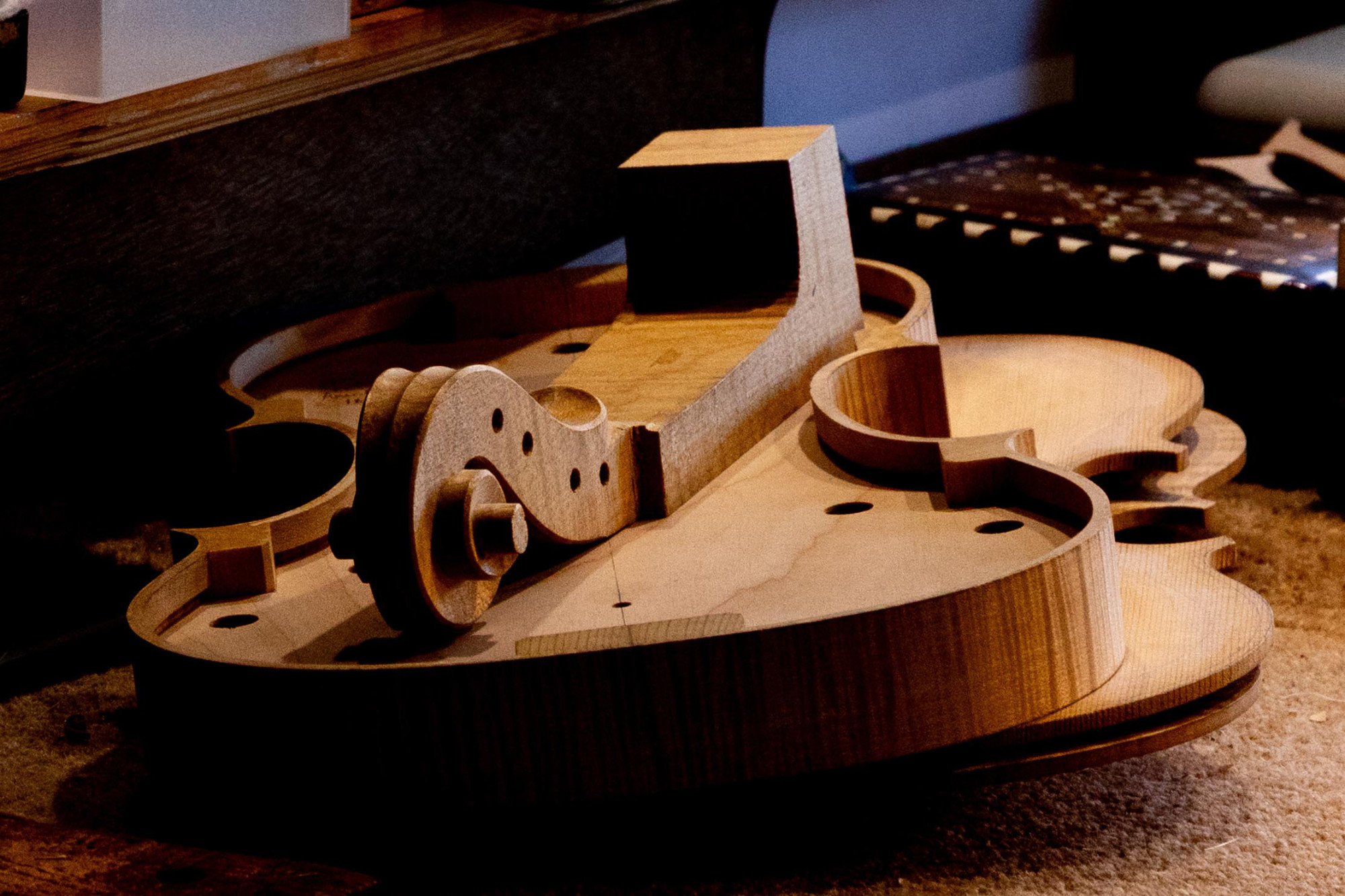
This project does not describe in detail the whole process of making a violin – the quarter sawn tree trunk for stability, the moulding blocks for the ribs, the templates for the front and back, the cutting, filing, the gouging and rough-arching, the purfling, the carving and the varnishing. But whilst modern equivalents have replaced some tools, the processes and techniques are essentially unchanged, and it is the preservation of these traditions that maintains the highest standards of craftmanship in this and every other workshop and carries them into the future.